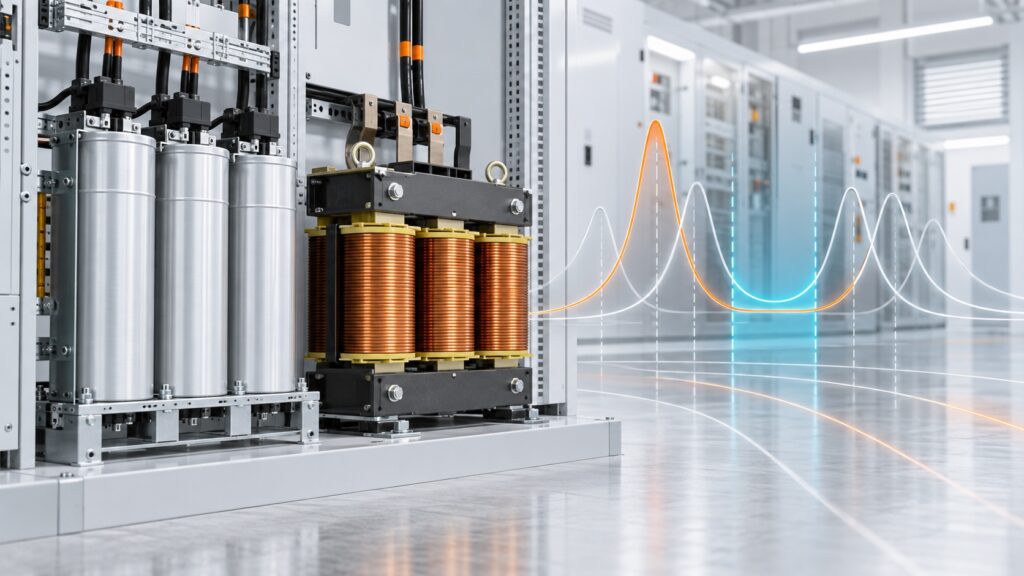
A detuned reactor protects a capacitor bank by shifting the bank’s resonance below troublesome harmonic frequencies. The percentage printed on the reactor is therefore a system-design parameter, not a preference that can be chosen from voltage and kVAR alone. Selecting 5.67%, 7% or 14% requires the network frequency, capacitor voltage, background harmonic spectrum and project objective.
The percentage describes the reactor reactance in relation to the capacitor reactance at the fundamental frequency. Together, the reactor and capacitor form a tuned branch. A higher reactor percentage produces a lower resonant frequency and increases the voltage across the capacitor. This is why the capacitor’s rated voltage and kvar output must be coordinated with the reactor.
| Reactor option | General design implication | Checks required |
|---|---|---|
| 5.67% | Higher tuning frequency and lower reactor voltage drop | Background harmonics and utility/project practice |
| 7% | Common detuned approach for networks with fifth-harmonic concern | Actual spectrum, capacitor voltage and thermal margin |
| 14% | Lower tuning frequency and stronger separation from low-order harmonics | Greater voltage rise, losses, size and project objective |
These are design directions, not universal rules. The final resonant frequency and component ratings should be calculated for the actual system conditions and confirmed by the responsible engineer.
Measure voltage and current harmonics at the intended connection point during representative production. Check the fifth and seventh harmonics, triplen components, existing capacitor stages and any generator or solar operating mode. A detuned bank is intended to avoid resonance and absorb only limited harmonic current. It should not be treated as a substitute for an active harmonic filter when the site needs significant harmonic-current compensation.
Read Detuned Reactor vs Standard Capacitor Bank and Why Capacitor Banks Fail in Harmonic Systems for the wider risk assessment.
The reactor raises the fundamental-frequency voltage across the capacitor. A capacitor selected only from the bus voltage may therefore be overstressed. Calculate the capacitor terminal voltage, operating current, kvar at the actual voltage and expected temperature. Confirm discharge devices, switching components, fuses and conductor ratings for the resulting current.
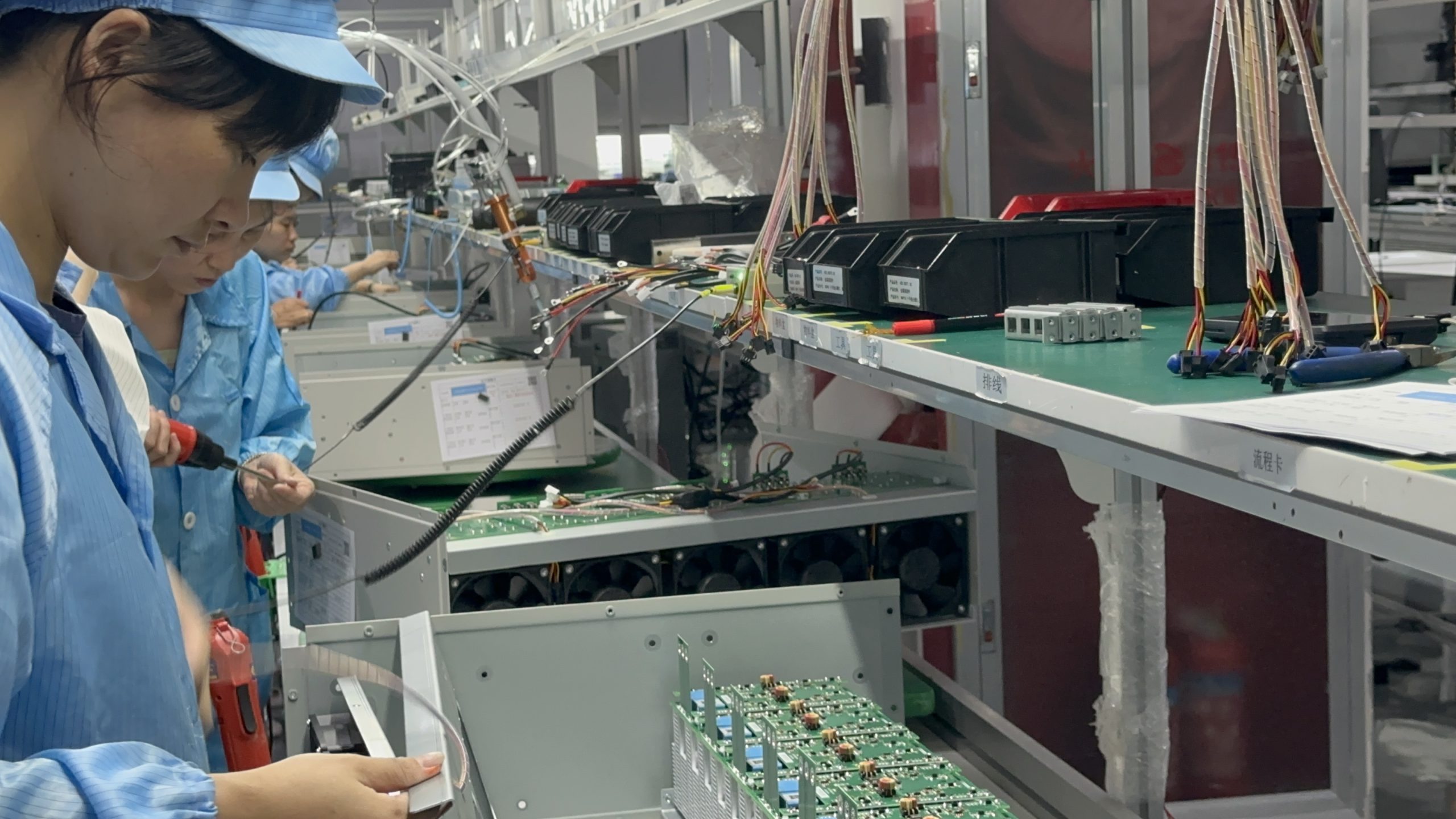
Detuned reactor selection should use the real network frequency, capacitor tolerance, expected harmonic spectrum and operating voltage. Confirm the reactor inductance tolerance, thermal class, temperature protection and continuous RMS current. The capacitor voltage rating must allow for the voltage rise created by the reactor and for harmonic loading. Also check whether the bank will switch in steps and whether contactors, fuses and ventilation suit the resulting inrush and heat.
Record background voltage harmonics with the existing bank disconnected and repeat measurements at representative load. If the network configuration or utility impedance may change, test more than one operating state. The chosen tuning frequency must remain safely away from dominant harmonic orders and network resonance. Refer to the applicable project specification and the IEC standards catalogue when defining component and test requirements. These checks are essential for dependable detuned reactor selection.
No. It is common in many projects, but the safest design depends on frequency, spectrum, component ratings and the applicable project practice.
No. A detuned bank is primarily a protected reactive-power solution. Significant nonlinear current may still require an AHF.
Only after its voltage, current, kvar, age and condition are checked against the proposed reactor.
Share the single-line diagram, capacitor stages and harmonic report with Elumotive for a preliminary detuned-bank review. Contact our engineering team.