An active harmonic filter (AHF) or static var generator (SVG) may have the correct nominal current rating on a quotation and still have less usable current at the installed location than the design assumes. The gap usually appears when ambient temperature, enclosure airflow, altitude, adjacent heat sources, dust loading or combined compensation duties were not included in the capacity review.
Quick answer: AHF and SVG ratings are stated under defined reference conditions. The available continuous current at a project site must be checked against the manufacturer’s derating data, actual ambient temperature, altitude, enclosure ventilation, installation clearance and assigned harmonic/reactive-power duties. Do not apply a universal derating percentage: the valid limit depends on the specific power stage, cooling system, component ratings and product documentation.
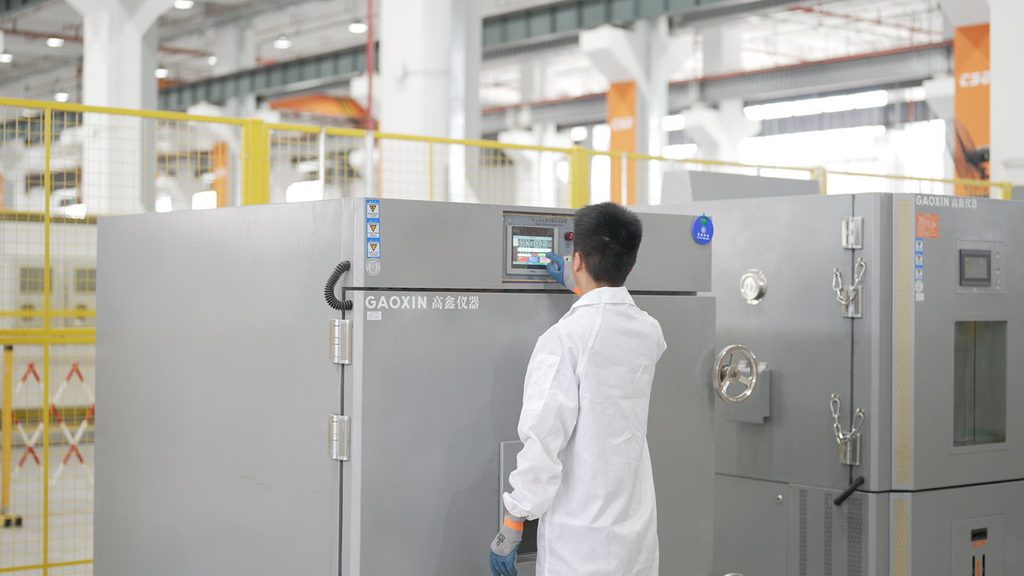
Converter-based power-quality equipment produces heat in power semiconductors, busbars, inductors, capacitors, filters, auxiliary power supplies and cooling components. The internal temperature of these parts is driven by electrical losses and the ability of the enclosure to reject heat.
The nameplate rating is therefore a design point, not a promise that the same output is available in every ambient condition. A site may see lower available current when the panel is installed in a hot electrical room, in direct sun, in a compact container, at high altitude, near transformers, or behind obstructed filters. The risk is not limited to a trip. Continuous high temperature can accelerate component aging and make maintenance intervals more critical.
For AHF projects, also distinguish total load current from compensation current. For SVG projects, distinguish nominal kvar from the actual current required at the lowest credible bus voltage. A combined or hybrid device may have to share converter current among harmonic filtering, reactive compensation and balancing, depending on its control priority.
Conduction and switching losses increase the temperature of power modules. Magnetic components, DC-link capacitors and control electronics also have temperature limits. Fans move heat only if there is a usable inlet path, clean filters, a free exhaust path and sufficient pressure margin.
A cabinet installed in a 25 °C test area does not experience the same thermal condition as one in a 45 °C room with a transformer beside it. The room temperature is only one input. The engineer should also consider cabinet inlet temperature, recirculation from nearby exhausts, solar gain for outdoor equipment, mounting clearances, dust accumulation and the heat released by adjacent panels.
| Site condition | Why it affects available current | Evidence to collect | Design response |
|---|---|---|---|
| High room ambient | Reduces temperature margin for the converter and passive components | Seasonal temperature record and HVAC design data | Use product derating data; improve room cooling or capacity margin |
| Restricted airflow | Causes hot-air recirculation or insufficient exhaust | Cabinet layout, clearance dimensions, fan direction | Correct layout, ducting or separation before commissioning |
| Dust or corrosive environment | Restricts filters and can degrade cooling or connections | Environmental classification and maintenance history | Select suitable enclosure strategy and maintenance plan |
| Outdoor solar exposure | Raises enclosure inlet and internal temperature | Site orientation, shade and solar data | Provide shade, ventilation and verified outdoor rating |
| Adjacent transformer or VFD panels | Adds local heat and may warm inlet air | Thermal survey and equipment layout | Separate heat sources or redesign airflow |
| High altitude | Changes air-density-dependent cooling and insulation conditions | Installation elevation and supplier data | Apply equipment-specific altitude limits and verification |
At higher elevation, lower air density can reduce convective cooling. Air insulation behavior also changes with altitude. The practical result is that the same cabinet may require a different thermal or dielectric assessment from an installation near sea level.
The relevant altitude limit must come from the specific equipment documentation and the governing project standard. Do not infer it from another supplier’s panel or from an unrelated electronic device. If a site exceeds the published reference altitude, request written confirmation of the permitted operation, any required derating, insulation coordination, enclosure change or test evidence.
Altitude may also influence associated equipment: breakers, contactors, busbars, transformers and cable accessories can have their own ratings. A power-quality cabinet cannot be assessed in isolation if its protective devices or assembly clearances become the limiting item.
A fan installed on a panel door is not proof of adequate cooling. Effective ventilation requires a complete air path.
Verify fan alarms, temperature sensors and controller responses during commissioning. A fan-failure alarm is useful only when it is correctly mapped, recorded and acted upon. The project maintenance plan should state inspection frequency, filter cleaning criteria and the expected behavior if temperature rises beyond a warning or trip threshold.
An AHF operating intermittently below its current limit may have a different thermal profile from one compensating a high harmonic current continuously. An SVG can move from light duty to high reactive current rapidly as motors, chargers or process loads change. A hybrid system may be thermally limited by the combination of functions, not by either function viewed alone.
The capacity review should identify:
Avoid treating a maximum display value as continuous capability. Review the thermal conditions at the operating state the customer actually expects to sustain.
Consider two 200 A AHF installations with the same nonlinear load. The first is mounted indoors in a conditioned electrical room with clear inlet and exhaust space. The second is installed in a compact outdoor enclosure beside a transformer, with high seasonal ambient temperature and a dust-prone intake path.
The nameplate is identical, but the design review cannot assume identical continuous output. The second arrangement needs the manufacturer’s enclosure-specific temperature and altitude data, a review of heat rejection from the transformer, airflow clearance, filter maintenance access and the expected seasonal load duration. The correct response might be enclosure changes, improved ventilation, additional capacity or a revised installation location. It should not be an undocumented assumption that both sites can continuously deliver the same current.
For related sizing context, review our AHF selection guide and power-quality audit checklist.
No. IP rating addresses ingress protection. Continuous current at high temperature depends on the complete thermal design, cooling path and manufacturer derating data.
No. A fan cannot correct blocked airflow, inadequate room heat removal, unsuitable enclosure design, high-altitude limitations or component temperature limits. The whole cooling path must be assessed.
Additional capacity may help, but it should be based on the verified site condition and duty requirement. It does not replace correct ventilation, installation clearance, protection coordination or maintenance planning.
AHF and SVG capacity should be stated for the environment in which the equipment will operate, not only for the reference condition in a catalogue. Send the site ambient range, altitude, enclosure layout, ventilation details, nearby heat sources and load profile to Elumotive for a preliminary derating review.


Leave a Comment