

Summary
Shanghai Tongren Hospital faced harmonic distortion associated with nonlinear medical equipment and building-service loads. The measured total harmonic current distortion rate, THDi, was approximately 12%, with the 3rd-, 5th-, and 7th-order harmonics as the main components.
SET provided a 200 A Active Power Filter to deliver real-time harmonic compensation. After implementation, the reported THDi decreased to approximately 2%, improving the power quality supplied to critical hospital loads.
Project Background
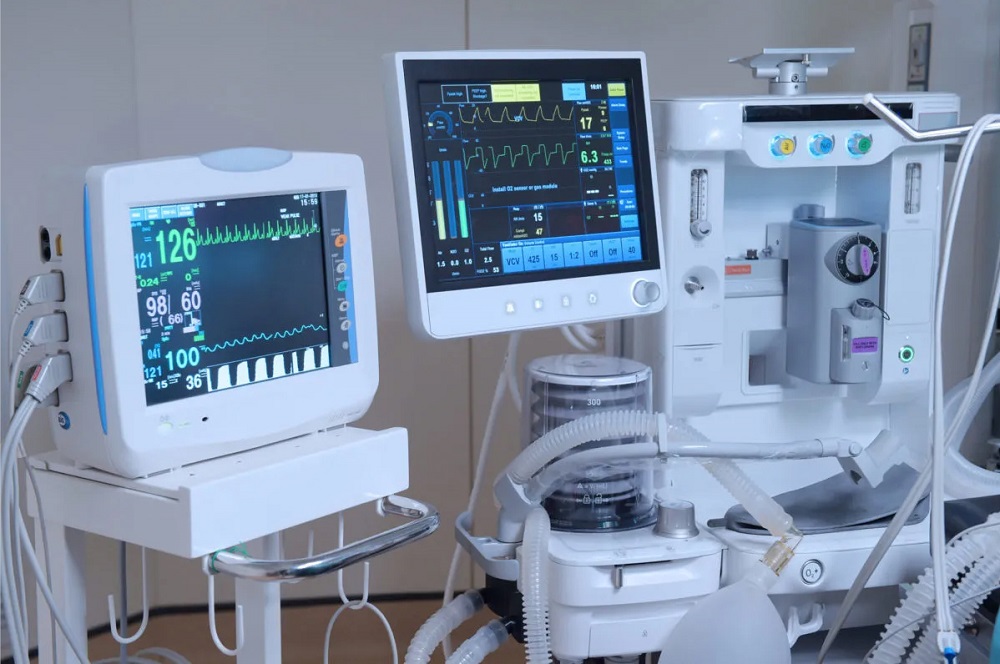
Hospitals depends on a wide range of electrical and electronic equipment, including medical imaging systems, ventilation equipment, elevators, lighting, computers, and uninterruptible power supplies.
Many of these loads use rectifiers, switching power supplies, frequency converters, and other power electronic components. Although these devices support efficient and precise operation, they can also introduce harmonic currents into the hospital’s electrical distribution system.
Because medical instruments process sensitive signals and support critical clinical operations, maintaining stable power quality is particularly important. Harmonic interference can affect equipment reliability, increase electrical losses, and create additional stress within the distribution system.
Hospital Power Quality Challenge and Customized Solution
Measurements at the site indicated a THDi of approximately 12%. The harmonic spectrum was mainly associated with the 3rd-, 5th-, and 7th-order harmonics, together with smaller higher-order components.
Without effective treatment, these harmonic currents could increase conductor and transformer heating, raise neutral-current stress, disturb sensitive electronic equipment, and reduce the reliability of the hospital’s electrical system.
To address these conditions, the project adopted a 200 A Active Power Filter. The system was designed to monitor load currents continuously, identify harmonic components, and inject compensation currents with the opposite phase. This real-time compensation approach allows the filter output to follow changes in hospital equipment operation throughout the day.
| Item | Project Configuration |
|---|---|
| Application | Hospital electrical distribution system |
| Power quality equipment | Active Power Filter |
| Rated compensation current | 200 A |
| Main harmonic components | 3rd, 5th, and 7th orders |
| THDi before treatment | Approximately 12% |
| Compensation method | Real-time dynamic harmonic compensation |
Reported Result
After the 200 A Active Power Filter was commissioned, the reported THDi decreased from approximately 12% to approximately 2%.
| Performance Indicator | Before APF | After APF |
|---|---|---|
| Total harmonic current distortion, THDi | Approximately 12% | Approximately 2% |
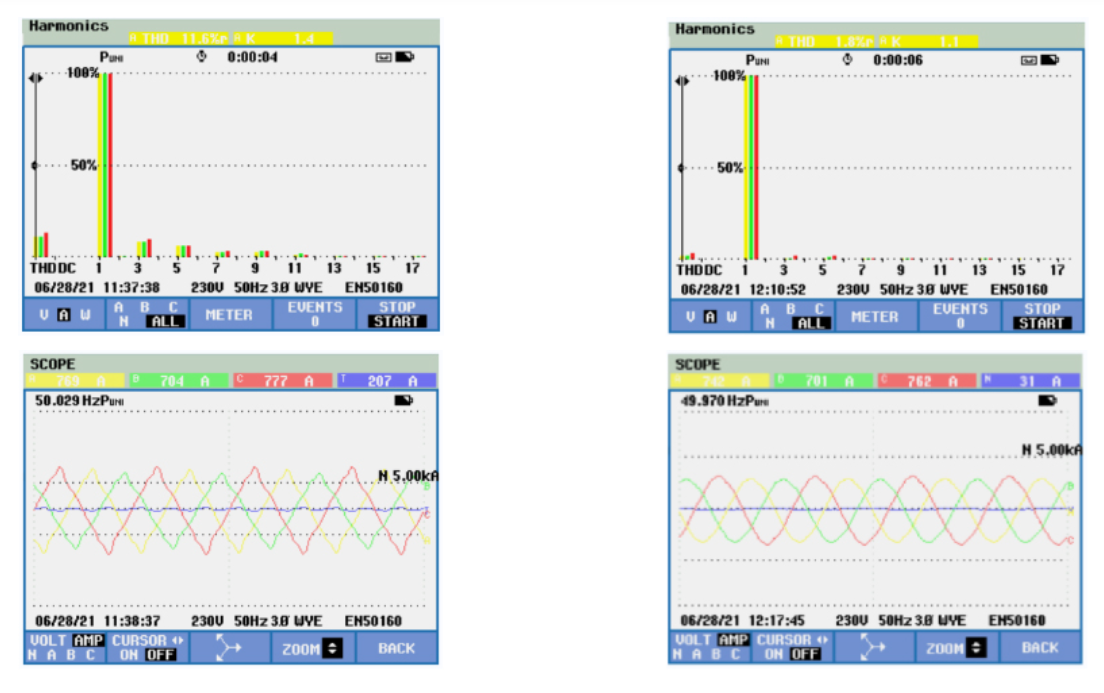
The reported result shows a substantial reduction in harmonic current distortion and improved power quality for the hospital’s electrical distribution system.
FAQ
Q: Why are harmonics a concern in hospitals?
A: Hospitals use many nonlinear electronic loads. Harmonic currents generated by these devices can increase electrical losses, cause overheating, and interfere with sensitive equipment.
Q: Which harmonic orders were prominent in this project?
A: The reported harmonic conditions were mainly associated with the 3rd-, 5th-, and 7th-order harmonics, together with smaller higher-order components.
Q: Why was an Active Power Filter selected?
A: An APF can monitor harmonic currents continuously and provide dynamic compensation as hospital loads change.
Q: What capacity was installed?
A: The project used a 200 A Active Power Filter.
Q: What result was reported after implementation?
A: The reported THDi decreased from approximately 12% to approximately 2%.
Need a Power Quality Solution?
Send voltage level, transformer capacity, load type, THDi, THDv, power factor, and installation requirements.