IEEE 519 harmonic compliance is a project process, not a label on an equipment quotation. The engineer must define the point of common coupling, short-circuit ratio, current-demand data and the acceptance test. IEC 61000 documents add complementary measurement and compatibility guidance for equipment and installations.
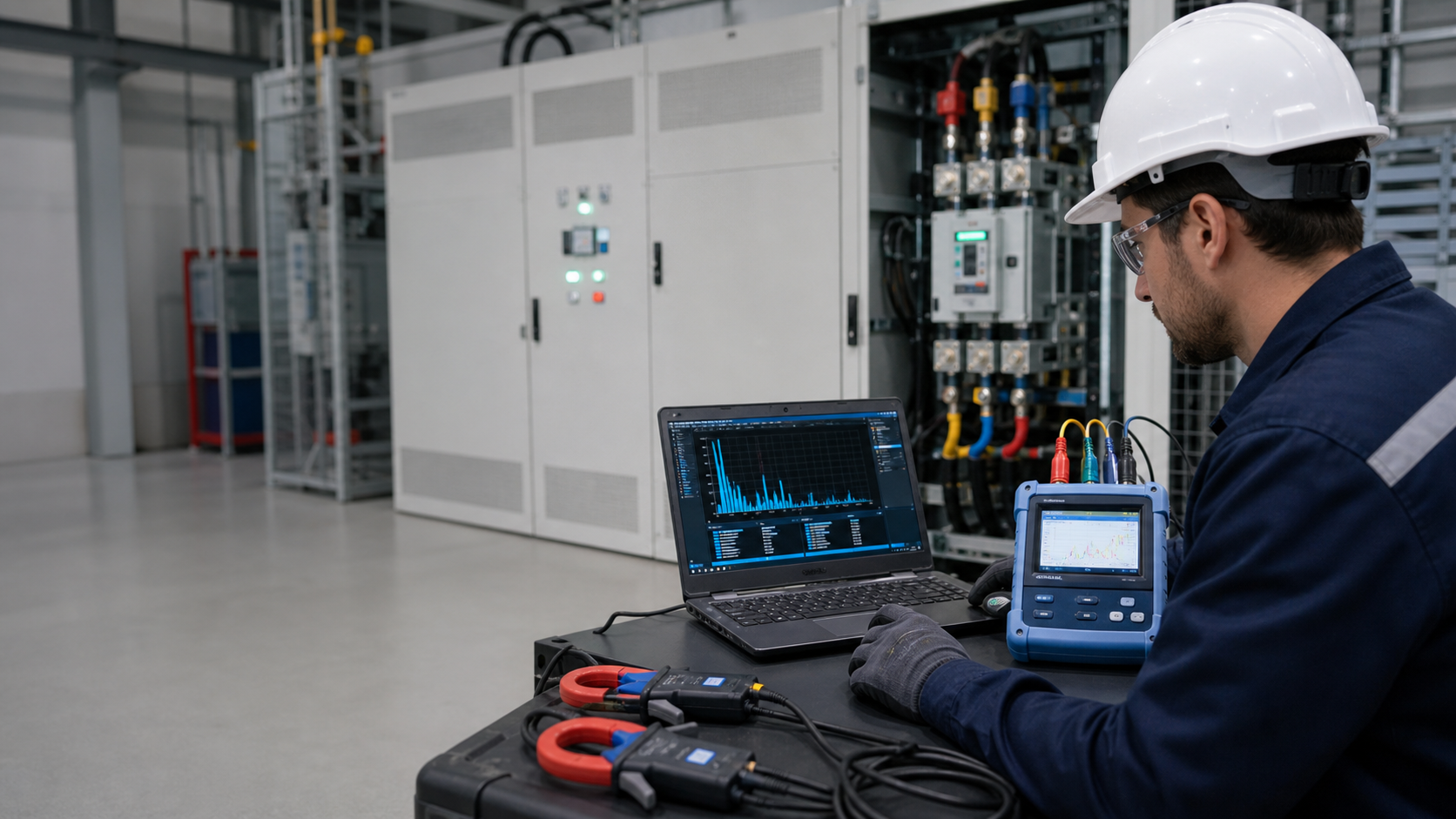
The point of common coupling determines which voltage and current limits apply. Record maximum demand current, short-circuit current, transformer data and operating scenarios at that point. Separate background distortion from the facility’s contribution, and capture harmonic spectra during minimum load, normal production and the most demanding process. A clear measurement plan prevents disagreement after commissioning.
Specify the target residual THDi, voltage distortion, power factor, phase balance, response time and alarm behaviour. Confirm CT placement, control mode, protection, communication and bypass operation. For capacitor systems, include resonance checks and switching tests. For AHF or SVG systems, record the before-and-after waveform and verify that the equipment remains stable when loads change quickly.
No. The standard defines system-level harmonic objectives. Equipment must be selected and tested against the project conditions.
They address related but different aspects of compatibility, measurement and system performance. The project engineer should identify which documents apply.
Yes, when the bank, tuning and protection are designed from measured harmonics and verified at the PCC.
Use the results to compare active harmonic filter solutions, SVG and hybrid VAR systems and power capacitor systems. The equipment rating should follow the measured load profile, available fault level, cabinet environment and planned expansion.
Share your PCC data and project limits with Elumotive for a compliance-oriented AHF, SVG or capacitor proposal. For reference, review this power-quality resource and compare the measured result with your site requirements.
Keep the one-line diagram, test records, protection settings and commissioning results together with the quotation. A documented baseline lets the maintenance team verify improvement after installation and gives procurement a clear specification for future expansion.
Review the measurements again after major process changes, transformer replacement, generator operation or renewable-energy expansion. This simple follow-up keeps the IEEE 519 harmonic compliance recommendation aligned with the real operating conditions.
Use measured operating data to choose the control mode, current rating and protection settings. The same equipment can behave differently at light load, normal production, generator operation or renewable-energy export, so the final specification should describe each scenario. Keep the baseline waveform, harmonic spectrum and power-factor trend with the project file.
After installation, repeat the measurements and compare the result with the agreed acceptance values. Check temperature, alarms, communication, phase balance and response during the most demanding process step. This follow-up turns a one-time purchase into a repeatable power-quality improvement plan and gives the maintenance team a clear reference for future expansion.


Leave a Comment