Active harmonic filter troubleshooting is faster when alarms are linked to operating conditions instead of treated as isolated faults. Over-temperature, CT wiring, overload and communication alarms each point to a different part of the power-quality system. A structured check protects the equipment and helps maintenance teams restore harmonic performance quickly.
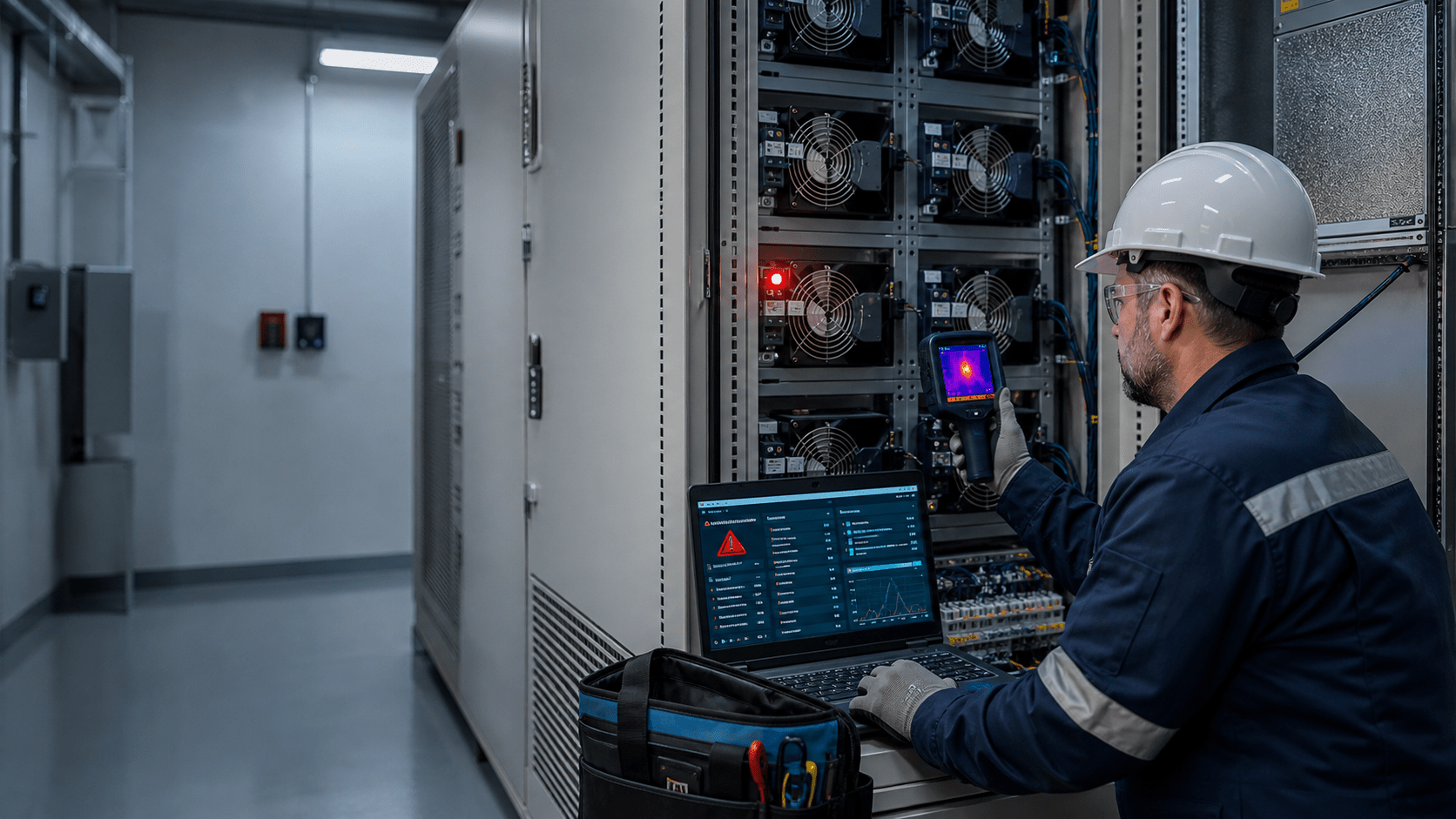
Record the exact alarm code, time, load level and cabinet temperature. Compare the event with the plant schedule: a drive start, welding cycle, generator transfer or capacitor-stage change may explain the trigger. Do not reset repeatedly without capturing the evidence. Check whether the alarm appears on one module or across the complete AHF bank, because a single module fault and a system-level overload require different actions.
Blocked air paths, dirty filters and failed fans are common reasons for thermal alarms. Inspect inlet and outlet clearance, fan rotation and internal temperature. For CT alarms, verify phase order, polarity, ratio and terminal tightness. For overload alarms, compare the measured harmonic current with the AHF rating and confirm that the selected compensation mode matches the load. Communication faults require a check of address, baud rate, termination and cable shielding.
The shift may contain a higher VFD, UPS or rectifier load, or the cabinet may be operating with reduced airflow. Compare current and temperature trends by shift.
Yes. Reversed polarity or an incorrect phase sequence can make the controller detect an implausible current vector and stop compensation.
Not automatically. Most alarms can be isolated through the event log, wiring checks, thermal inspection and a controlled retest.
Use the results to compare active harmonic filter solutions, SVG and hybrid VAR systems and power capacitor systems. The equipment rating should follow the measured load profile, available fault level, cabinet environment and planned expansion.
Send the alarm code, current waveform and cabinet rating to Elumotive for troubleshooting support. For reference, review this power-quality resource and compare the measured result with your site requirements.
Keep the one-line diagram, test records, protection settings and commissioning results together with the quotation. A documented baseline lets the maintenance team verify improvement after installation and gives procurement a clear specification for future expansion.
Review the measurements again after major process changes, transformer replacement, generator operation or renewable-energy expansion. This simple follow-up keeps the active harmonic filter troubleshooting recommendation aligned with the real operating conditions.


Leave a Comment