
PROJECT CASES
Summary
Shanghai Elumotive Tech conducted on-site power-quality measurements at eight distribution points for China National Petroleum Daqing Oilfield. The assessment identified two Monitoring Points out of a total of eight as the most critical examples, characterized by low power factor, elevated total harmonic current distortion (THDi), reactive-power demand, and unequal three-phase current loading occurring together.
Based on the measured conditions at each location, Elumotive designed dedicated hybrid compensation cabinet configurations rather than applying one standard configuration across the site. Post-implementation measurements at the two representative points confirmed improved power factor, reduced THDi and reactive power, and substantially improved phase-current balance.
Project Background
China National Petroleum Daqing Oilfield is a major oil and gas production base. Stable electrical distribution is essential to continuous oil production, fluid handling, injection, gathering, and supporting operations.
Its electrical networks supply a combination of motor-driven production equipment, pumping systems, process auxiliaries, and control loads. Depending on the connected equipment and operating state, these loads can create changing reactive-power demand, nonlinear current distortion, and unequal loading across the three phases.
The site assessment therefore focused on measured operating conditions rather than nominal equipment ratings alone. Reactive power, harmonic current, and current imbalance were evaluated together at each distribution point so that the compensation configuration could reflect the actual local load condition.
Site Assessment and Solution
Shanghai Elumotive Tech measured eight distribution points serving different equipment and operating conditions. The measurement results were used to identify the two points with the most significant combined power-quality issues and to develop dedicated hybrid compensation cabinet configurations for each location.
The engineering objective was to improve power factor while mitigating harmonic current, reducing reactive-power demand, and improving three-phase current balance under the recorded operating conditions.
Key Power Quality Issues
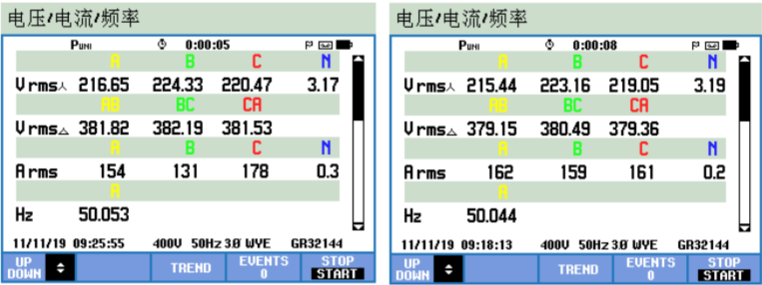
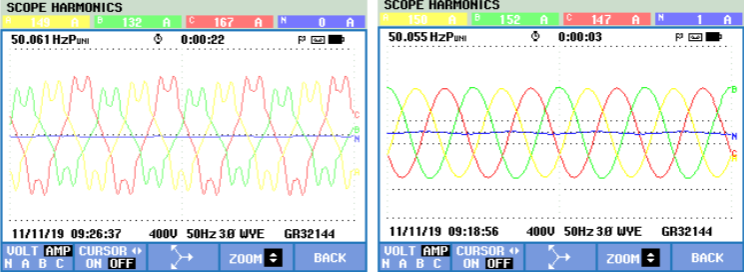
Monitoring Point 1 and Monitoring Point 2 showed the most complex pre-compensation conditions. Both points had elevated THDi, reactive-power demand, low phase power factor, and unequal phase currents. At Monitoring Point 1, the current spread between phases was 47 A; at Monitoring Point 2, it was 21 A.
These measurements showed that reactive-power compensation alone would not address the full electrical condition. The solution needed to manage reactive power, harmonic current, and phase-current balance together.
Verified Results
| Indicator | Monitoring Point 1 | Monitoring Point 2 |
|---|---|---|
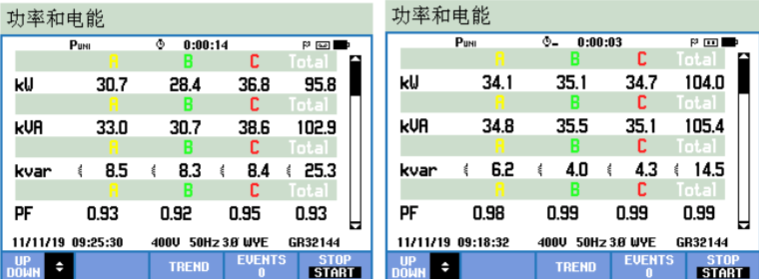
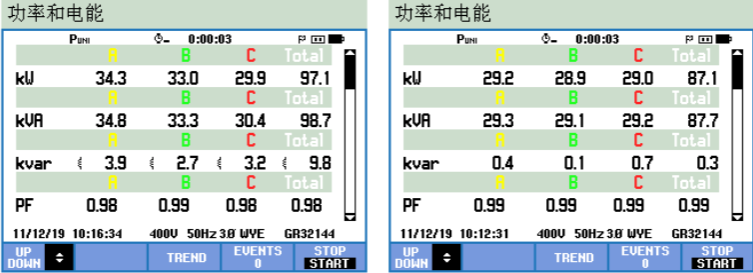
| Power factor before | 0.92-0.95 | 0.87-0.93 |
| Power factor after | 0.98-0.99 | 0.97 on all phases |
| Average power factor before / after | 0.93 / 0.99 | 0.89 / 0.97 |
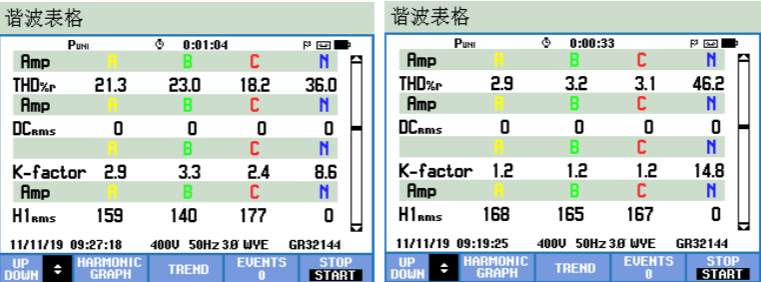
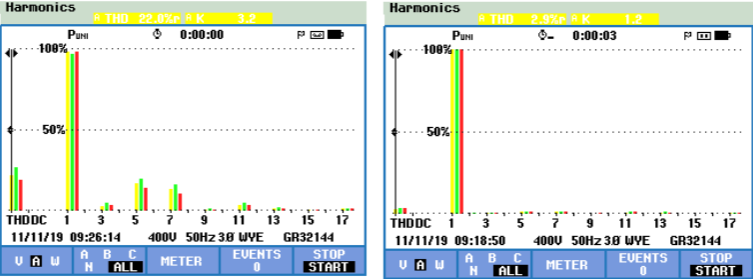
| THDi before | 18.2%-23.0% | 17.5%-27.8% |
| THDi after | 2.9%-3.2% | 7.1%-8.8% |
| Average THDi before / after | 20.8% / 3.1% | 21.7% / 8.0% |
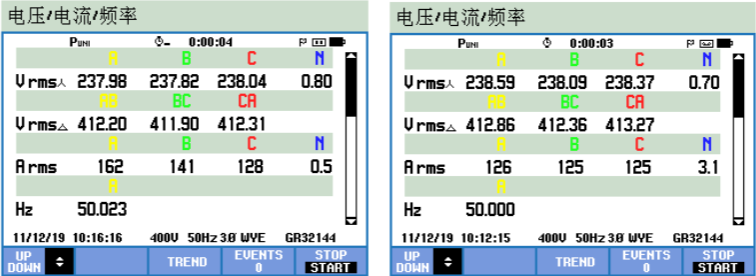
| Phase-current range before | 131-178 A | 31-52 A |
| Phase-current range after | 159-162 A | 38-39 A |
| Current spread before / after | 47 A / 3 A | 21 A / 1 A |
| Reactive power before | 8.3-8.5 kvar | 2.1-5.2 kvar |
| Reactive power after | 4.0-6.2 kvar | -0.3 to 0.2 kvar |
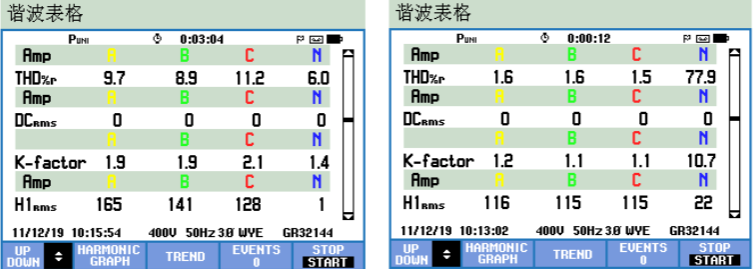
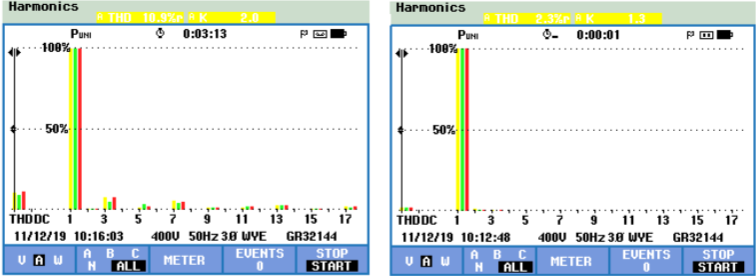
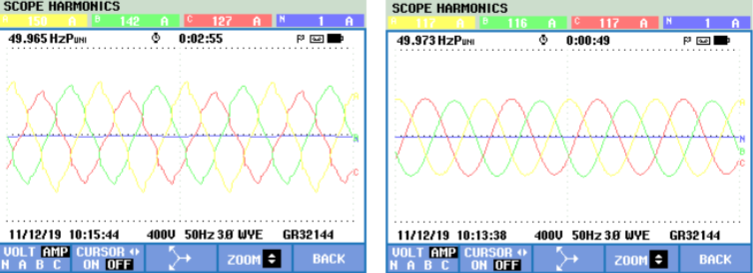
At Monitoring Point 1, average power factor increased from 0.93 to 0.99 and average THDi decreased from 20.8% to 3.1%. The phase-current spread fell from 47 A to 3 A.
At Monitoring Point 2, average power factor increased from 0.89 to 0.97 and average THDi decreased from 21.7% to 8.0%. The phase-current spread fell from 21 A to 1 A. Reactive power was maintained close to zero after compensation, at -0.3 to 0.2 kvar per phase.
Project Outcome
The eight-point assessment enabled Shanghai Elumotive Tech to apply differentiated hybrid compensation cabinet configurations for the distribution conditions at China National Petroleum Daqing Oilfield. The two representative points demonstrated that oilfield distribution challenges can involve reactive power, harmonic current, and phase imbalance simultaneously.
The verified results show that a measurement-based, point-specific compensation approach improved power factor, lowered THDi and reactive power, and substantially improved phase-current balance at the selected points. The accompanying comparison charts provide a visual record of the measured improvement.
Advantages of the Hybrid Compensation Approach
- Addresses reactive power, harmonic current, and phase-current imbalance as related operating conditions.
- Supports point-specific cabinet configurations for different equipment and load conditions.
- Uses before-and-after measurements at the same distribution point for verification.
- Separates verified power-quality improvements from energy-saving or cost-saving calculations that require additional metered-energy, tariff, and operating data.
FAQ
Q: Why are only two monitoring points included in this project case?
A: Eight points were monitored at the site. This case presents the two points with the most significant pre-compensation issues and the clearest measured improvement.
Q: What were the main issues before compensation?
A: The two reported points showed elevated THDi, phase power factor as low as 0.87, reactive-power demand, and unequal three-phase current loading.
Q: What was the highest recorded THDi before compensation?
A: The highest reported value was 27.8% on phase A at Monitoring Point 2.
Q: Does this case prove a specific percentage of energy saving?
A: No. The supplied records verify improvements in power factor, reactive power, THDi, and phase-current balance at the two points. A specific energy-saving or cost-saving percentage requires additional metered-energy and operating data.
Send your voltage level, transformer capacity, load type, THDi, power-factor, reactive-power data, and installation requirements to Elumotive for a measurement-led assessment.